Guide
C-Section Recovery Timeline Week by Week 2026
By Postpartum Spot Editorial Team · Updated 2026-03-10
site_id: postpartum-site target_domain: postpartumspot.com title: "C-Section Recovery Timeline: Week by Week Guide (2026)" description: "Your complete week-by-week C-section recovery guide. Learn what's normal, when to worry, and how to heal faster after cesarean delivery." slug: c-section-recovery-timeline-week-by-week-2026 publishedAt: "2026-04-21" dateModified: "2026-04-22" author: "Rachel, Postpartum Care Specialist" category: "Postpartum Recovery" image: "/images/articles/c-section-recovery-timeline-week-by-week-2026-hero.jpg" [{"@type":"Question","name":"How long does it take to recover from a C-section?","acceptedAnswer":{"@type":"Answer","text":"Full C-section recovery takes 6 to 8 weeks for the incision to close, though internal tissues can take 6 months or longer to fully heal. Most people feel significantly better by week 4-6 but should avoid heavy lifting for at least 8 weeks."}},{"@type":"Question","name":"When can I drive after a C-section?","acceptedAnswer":{"@type":"Answer","text":"Most doctors recommend waiting 2 to 4 weeks after a C-section before driving, and only after you've stopped taking prescription pain medication and can move comfortably without pain."}},{"@type":"Question","name":"When can I lift my baby after C-section?","acceptedAnswer":{"@type":"Answer","text":"You can lift your own baby immediately after delivery, but avoid lifting anything heavier than your baby for at least 6 weeks. Use proper body mechanics—bend at the knees, not at the waist—and avoid straining your abdominal muscles."}},{"@type":"Question","name":"How do I know if my C-section incision is infected?","acceptedAnswer":{"@type":"Answer","text":"Signs of infection include increasing redness around the incision, warm or hot skin at the site, foul-smelling discharge, fever above 100.4°F (38°C), or intense pain that worsens instead of improves. Contact your provider immediately if you notice any of these."}},{"@type":"Question","name":"Can I take a bath 2 weeks after C-section?","acceptedAnswer":{"@type":"Answer","text":"Most providers recommend waiting at least 3 to 4 weeks before submerging in a bath or swimming. Once your incision has closed and your provider approves, bath immersion is generally safe and can help with soreness."}},{"@type":"Question","name":"When will my C-section scar stop hurting?","acceptedAnswer":{"@type":"Answer","text":"Sharp incision pain typically improves significantly by weeks 3-4 as the tissue heals. Aching, numbness, and itching around the scar can persist for several months as nerves regenerate. Most people report minimal discomfort by 8-12 weeks postpartum."}},{"@type":"Question","name":"How long should I wait to have sex after a C-section?","acceptedAnswer":{"@type":"Answer","text":"Most healthcare providers recommend waiting 6 to 8 weeks after C-section before having sex, regardless of whether the incision appears healed externally. Internal healing takes longer and sexual activity carries risks of infection before the recommended timeframe."}},{"@type":"Question","name":"What activities should I avoid during C-section recovery?","acceptedAnswer":{"@type":"Answer","text":"Avoid heavy lifting (nothing over 10-15 pounds), intense exercise, climbing stairs repeatedly, vacuuming, carrying older children, driving (for 2-4 weeks), and any activity that strains your abdominal muscles for at least 6 to 8 weeks postpartum."}}]
Every cesarean birth is major surgery—yet most new parents receive virtually no detailed guidance on what recovery actually feels like week by week. This guide changes that. It covers incision healing, pain management, activity restrictions, emotional changes, and red flags, so you know exactly what to expect as your body closes the chapter on birth and begins the work of recovery.
Table of Contents
- Weeks 1–2: The Hardest Stretch
- Weeks 3–4: Gradual Turning Point
- Weeks 5–6: Gaining Momentum
- Weeks 7–8: Approaching Normal
- Months 3–6: Long-Term Healing
- Core and Pelvic Floor Recovery
- Emotional Recovery: The Often-Ignored Part
- Signs Your Recovery Is on Track
- Warning Signs That Need Immediate Attention
- When Sex Becomes Possible: What to Expect
- Planning Your Next Pregnancy
- Frequently Asked Questions
- Sources & Methodology
Weeks 1–2: The Hardest Stretch
The first two weeks after a cesarean birth are physically intense. Your body has just undergone major abdominal surgery while simultaneously beginning the enormous task of postpartum recovery and, if breastfeeding, establishing milk production.
What Your Body Is Doing
Immediately after surgery, your uterus begins contracting—often in waves similar to menstrual cramps, particularly during breastfeeding. These afterpains are normal and help reduce bleeding. The incision site is initially covered with a sterile dressing, which your healthcare team will remove within 24 to 48 hours to assess healing. Beneath the surface, your body is working to close thousands of microscopic blood vessels and rebuild tissue at the surgical site.
Hormonal shifts are dramatic. If you had a cesarean after labor began—or if labor was attempted before the decision was made for surgery—your oxytocin levels may have surged in the hours before delivery. This can mean more intense emotional reactions in the first week as hormones recalibrate.
Your digestive system, which was handled and displaced during surgery, is resuming function. Gas pain is extremely common in the first week—the anesthesia, pain medications, and physical handling of the bowel during surgery all slow motility. Walking, simethicone (Gas-X), and heating pads help. If you experience significant abdominal distension, severe nausea, or inability to pass gas by day 3 or 4, tell your provider—this can indicate ileus (temporary bowel paralysis).
Common Experiences in Week 1
Most people spend the first 3 to 5 days in the hospital after a C-section. During this time, pain is managed with prescription medication delivered through an IV or oral dosing. You will be encouraged to get out of bed—slowly and with assistance—by day 1 or 2 to prevent blood clots and help restore normal digestive function.
Expect significant grogginess from anesthesia and pain medication. Constipation is extremely common after cesarean surgery due to anesthesia, opioid pain medications, and the physical handling of the bowel during surgery. Ask your care team about stool softeners on day 1 and take them proactively—hard stools create straining that stresses the incision.
Your incision will look reddish-purple and may feel numb, tingly, or hypersensitive. This is completely normal. The numbness typically improves over weeks to months as nerve pathways regenerate.
Tips for This Stage
- Stay ahead of pain: Take pain medication on schedule for the first few days rather than waiting until pain becomes severe. Unmanaged pain slows healing and makes movement more difficult. As pain decreases, you can space medication further apart before reducing.
- Support your incision: Hold a pillow against your incision when you cough, sneeze, laugh, or move. This is called "splinting" and dramatically reduces pain and stress on the healing tissue.
- Accept help: You cannot do this alone. Accept every offer of assistance. Let someone else manage meals, laundry, older children, and pet care. Your only job is to recover and care for your baby.
- Move gently: Short walks around the house beginning on day 2 help prevent blood clots, gas buildup, and stiffness. Walk at a pace that feels comfortable. Do not push through pain—mild discomfort is acceptable; sharp pain is not.
- Rest aggressively: Your body needs sleep to heal. Sleep when the baby sleeps, even if that means multiple short naps throughout the day. Enlist your partner or support person to handle nighttime diaper changes so you can focus on feeding and rest.
Weeks 3–4: Gradual Turning Point
By weeks 3 and 4, most people notice meaningful improvement. Pain decreases, mobility increases, and the emotional fog begins to lift. You may feel more like yourself—but this is also when many parents overdo it and set themselves back.
Physical Changes
The acute pain from the incision should have eased considerably. You may be down to over-the-counter pain medication (ibuprofen and acetaminophen in rotation, as recommended by your provider) or have stopped pain medication entirely. The incision itself will look slightly different—less angry red, more pink, and beginning to flatten.
Around weeks 3 to 4, many parents notice itching at the incision site. This is a sign of nerve regeneration and healing and is perfectly normal. Do not scratch. A gentle pat or a cool cloth can help.
Internal healing, however, is far from complete. The uterine incision takes much longer to strengthen than the skin incision appears to. Internal tissue healing occurs from the inside out—you won't see it, but it is happening. The fascia (connective tissue layer) is still fragile, and the uterine incision is only beginning to regain tensile strength.
Activity Guidelines for Weeks 3–4
Walking should become easier and more comfortable. You may be cleared for longer walks outdoors—start with 10-15 minutes and build gradually. However, you should still avoid:
- Lifting anything heavier than your baby (including car seats—use a stroller for outings)
- Carrying your baby in a car seat
- Stairs more than once or twice daily if possible—climbing stairs repeatedly stresses the incision and the abdominal wall
- Vacuuming, mopping, or any activity that involves twisting or core engagement
- Any exercise beyond gentle walking
This is also the stage when many parents feel "back to normal" emotionally and physically and begin resuming activities prematurely. Listen to your body. If something causes pain in your incision area, stop immediately. Recovery is not linear—some days will feel better than others.
Emotional Changes
The sleep deprivation that began during late pregnancy intensifies during the postpartum period, especially if breastfeeding. By week 3, exhaustion can manifest as mood changes—irritability, anxiety, tearfulness, or difficulty concentrating. These are also common symptoms of postpartum mood disorders, which are discussed in detail in our guide on baby blues vs postpartum depression.
The hormonal shifts of weaning (if you are combination feeding or supplementing) can also cause mood instability in the weeks 3-4 period. The drop in oxytocin as breastfeeding patterns change can trigger tearfulness and anxiety similar to the "baby blues."
Give yourself permission to rest. Speak to your provider if feelings are intense, persistent, or interfering with daily function. It is not weakness to ask for help—it is responsibility.
Weeks 5–6: Gaining Momentum
Weeks 5 and 6 bring continued improvement for most people. The incision is visibly healing and often much less tender. You may feel comfortable enough to resume many daily activities—though high-impact exercise and heavy lifting remain off-limits until your 6-week postpartum checkup and, typically, beyond.
What to Expect at Your 6-Week Checkup
If your provider follows standard guidelines, they will schedule a comprehensive postpartum visit around 6 weeks. At this appointment, expect:
- A physical examination of the incision site (externally and sometimes via bimanual exam to assess uterine healing)
- Assessment of uterine healing through size and position evaluation
- Discussion of contraception options (if not already addressed)
- Review of your emotional and mental health using a standardized screening tool
- Screening for postpartum depression and anxiety
- Evaluation of any ongoing symptoms
- Discussion of return to exercise and physical activity
Your provider may clear you for some activities at this visit, or may recommend additional time before certain activities. Every person's healing timeline is different — if you had complications or a particularly difficult surgery, you may need more time. If something doesn't feel right, ask for a follow-up or a referral to a specialist.
Digestion and Bowel Function
Many people report that bowel function normalizes around weeks 5 to 6. Constipation that persisted through weeks 1-4 often resolves as medication effects wear off and dietary fiber, fluids, and gentle movement do their work. Continue taking a stool softener if needed and eating high-fiber foods. If constipation continues to be problematic, speak with your provider about prescription or over-the-counter options — there are medications safe for breastfeeding people that can help.
Starting Light Exercise
If your provider clears you at the 6-week visit, you may begin reintroducing gentle exercise. Start with:
- Short walks (10 to 15 minutes, increasing gradually by 5-minute increments if each session goes well)
- Pelvic floor exercises (Kegels and other rehabilitative movements — more on this below)
- Postpartum-specific stretching and gentle yoga
- Swimming (if incision is fully closed and your provider has cleared it — often around weeks 6-8)
Avoid core-focused exercises that stress the abdominal incision until your provider specifically clears them AND you have been assessed for diastasis recti. Exercises like sit-ups, planks, crunches, and burpees place significant strain on healing tissue and can delay recovery or cause complications.
Weeks 7–8: Approaching Normal
By weeks 7 and 8, most people feel substantially better. Pain is minimal. Mobility is close to normal. You may feel ready to resume most normal activities—and in many cases, you can begin to do so.
Resuming Activities
Your provider may clear you to:
- Drive (if not already cleared and you are off prescription pain medication and can comfortably brake in an emergency)
- Return to work (depending on job demands — those with desk jobs may return, while those with physical jobs may need longer)
- Begin a gradual return to exercise (following your provider's specific guidance and a pelvic floor or women's health physical therapist's assessment)
- Swim or submerge in water (once incision is fully closed and your provider has specifically cleared this)
- Resume sexual activity (with your provider's clearance and when you feel emotionally and physically ready — readiness is the key factor, not just timing)
Remember that clearance does not mean you will feel 100% recovered. Many people look fine on the outside but are still healing internally. The fascia and muscle layers are still regaining strength. Listen to your body.
C-Section Scar Maturation
The incision scar is still forming and maturing during this period. It may look raised, firm, or reddish. Over the next several months, it will gradually flatten, soften, and fade in color. Scar massage—gentle pressure applied to the scar in circular motions—can help prevent adhesions and improve scar mobility. Your provider or a pelvic floor physical therapist can demonstrate proper technique.
If the scar feels significantly raised, firm, or itchy after week 8, discuss silicone gel products with your provider. Once fully closed, silicone scar treatment (gel sheets or topical gel) is the most evidence-supported intervention for improving scar appearance.
Months 3–6: Long-Term Healing
True internal healing after cesarean takes 6 months or longer. The uterine incision continues to strengthen, reaching approximately 70 to 80% of its original tensile strength by 6 months postpartum. The abdominal wall and fascial layers continue to remodel and strengthen during this period as well.
Resuming Higher-Intensity Exercise
Between months 3 and 6, most people can begin progressively reintroducing more vigorous exercise if they have been cleared by a provider and have been assessed for core function. However, this should be done gradually and with awareness of how your body responds.
High-impact exercise (running, jump training, heavy weightlifting) should be reintroduced only after you have:
- Demonstrated good core control in lower-impact activities
- Been evaluated for diastasis recti (abdominal muscle separation) by a pelvic floor PT
- Received clearance from your OB-GYN at your 6-week or subsequent visit
Many people make the mistake of jumping back into pre-pregnancy workouts too quickly. The abdominal wall after cesarean has been through significant trauma, and high-impact activity too soon can delay healing, worsen diastasis, and cause chronic pelvic floor dysfunction.
Working with a pelvic floor physical therapist during months 3-6 is one of the best investments in your long-term recovery. They can assess your core function, guide you through appropriate progression, and identify any scar tissue restrictions or pelvic floor dysfunction that needs treatment.
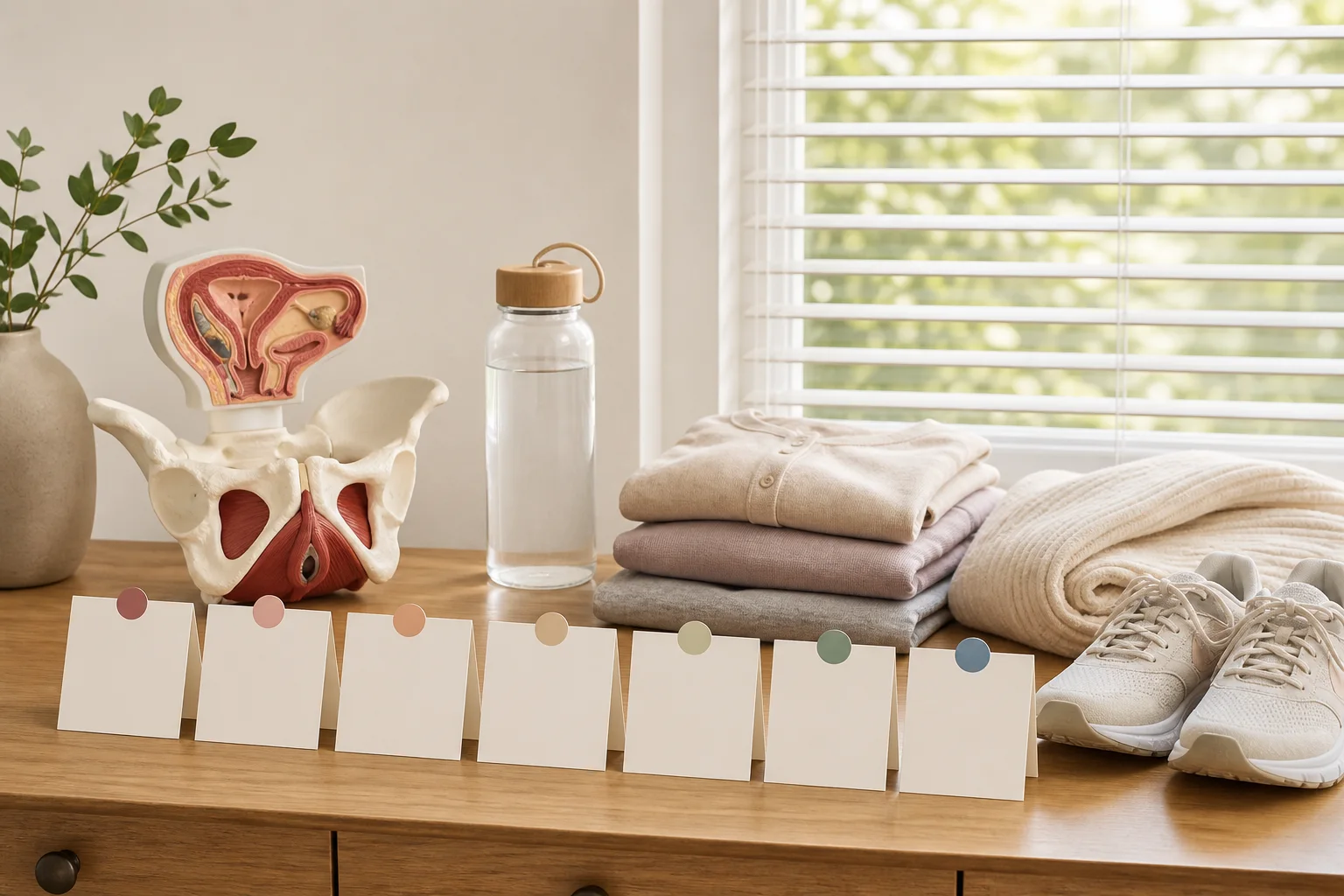
Core and Pelvic Floor Recovery
A cesarean delivery does not spare you from pelvic floor dysfunction. Pregnancy itself places enormous strain on the pelvic floor, and many people who deliver via cesarean experience urinary incontinence, pelvic organ prolapse, or core weakness. Pelvic floor physical therapy is strongly recommended for all postpartum individuals—regardless of delivery method—starting at 6 to 8 weeks postpartum.
Pelvic floor PT addresses:
- Urinary incontinence and urgency — leaking with coughing, sneezing, laughing, or exercise
- Pelvic organ prolapse symptoms — a sensation of heaviness, pressure, or bulge in the vaginal area
- Core muscle separation (diastasis recti) — separation of the rectus abdominus muscles at the midline, which is common after both pregnancy and abdominal surgery
- Scar tissue restriction at the cesarean site — adhesions that can cause pelvic pain, pain with intercourse, and restricted movement
- Painful intercourse (dyspareunia) — pain with penetration, which can have multiple causes including scar tissue, pelvic floor muscle spasm, and hormonal changes
Even if you have no symptoms, a baseline pelvic floor assessment is valuable. Many dysfunctions are present before symptoms become noticeable, and early intervention is far more effective than waiting until problems are severe.
Diastasis Recti and Cesarean
Diastasis recti (abdominal separation) is a natural consequence of pregnancy and is actually more common in cesarean deliveries than vaginal deliveries, possibly because the surgical process involves more direct handling of the abdominal muscles. A 2016 study in the Journal of Women's Health Physical Therapy found that 60% of people who had cesarean births had some degree of diastasis at 6 weeks postpartum.
Diastasis is measured by the width of the gap between the two sides of the rectus abdominus muscle at the midline. A gap of 2 finger-widths or more at or below the umbilicus is generally considered clinically significant. However, the width alone is not the only indicator of function — how the muscles activate and transfer load matters equally.
Working with a PT on core rehabilitation is the evidence-based approach to addressing diastasis. General exercise apps and online programs that are not specifically designed for postpartum bodies can worsen diastasis. Seek a PT who specializes in prenatal and postpartum rehabilitation.
Emotional Recovery: The Often-Ignored Part
The emotional arc of cesarean recovery is individual and often overlooked in recovery guides. Some parents feel at peace with their birth experience. Others experience grief, disappointment, or trauma related to the surgery. All of these responses are valid and deserve acknowledgment.
Birth trauma is real. A cesarean may have been planned and positive, or it may have been an emergency that happened under terrifying circumstances. Some people feel the incision of the surgery in their emotional life long after the physical wound has healed. Others feel relief at the delivery being over and do not connect any negative feelings to the cesarean experience.
But for some parents — whether the cesarean was planned or an emergency, whether the baby is healthy or faced complications — the experience leaves emotional marks. Signs that you may be processing birth trauma include:
- Intrusive thoughts or images related to the birth that you cannot control
- Avoiding thinking about the birth or talking about it
- Feeling disconnected from your body, your baby, or both
- Nightmares related to the birth
- Panic or anxiety symptoms (racing heart, sweating, feeling like something terrible is about to happen) when in medical settings or when reminded of the birth
- Anger, grief, or profound sadness that persists beyond the typical baby blues period
- Difficulty bonding with your baby that isn't explained by sleep deprivation alone
If you recognize these symptoms in yourself, speak with your provider about referral to a mental health professional experienced in perinatal care. Birth trauma is treatable — with EMDR (eye movement desensitization and reprocessing), trauma-informed therapy, or other evidence-based approaches. You do not have to suffer through this.
Signs Your Recovery Is on Track
Not sure if your recovery is progressing normally? These are positive indicators:
- Incision pain gradually decreasing week by week (not necessarily linearly, but trending downward over time)
- Gradual return of energy and ability to move without significant pain
- Normal lochia (postpartum bleeding) that follows the expected pattern: heavy (weeks 1–3), then tapering to lighter flow (weeks 4–6), then fading to spotting and eventually nothing
- No fever or only mild low-grade fever on the first day or two post-surgery
- No increasing redness, warmth, or drainage at the incision site
- Normal urinary function (able to urinate without pain by day 3)
- Bowel movements resuming within 3 to 5 days post-surgery (softer stools with stool softener support are normal; hard stools are not)
- Mental clarity returning as medication effects wear off and sleep deprivation isn't compounding exhaustion
- Ability to care for your baby without feeling that basic tasks are overwhelming (this will fluctuate with sleep deprivation but should not feel impossible)
Warning Signs That Need Immediate Attention
Contact your healthcare provider or seek emergency care immediately if you experience:
- Fever above 100.4°F (38°C) at any point after the first 24 hours post-surgery
- Heavy vaginal bleeding that soaks more than one pad per hour (not just increased flow with position change — continuous, heavy bleeding)
- Large blood clots (larger than a golf ball) passed vaginally
- Signs of incision infection: spreading redness, warmth, swelling, foul-smelling discharge, or increasing pain at the site
- Severe headache with vision changes (possible postpartum preeclampsia — this can occur up to 6 weeks postpartum)
- Leg pain, swelling, or redness (possible blood clot — particularly concerning if it's one-sided)
- Shortness of breath or chest pain (possible pulmonary embolism — call 911)
- Foul-smelling vaginal discharge (possible infection of the uterine lining — endometritis)
- Inability to urinate or severe pain with urination
- Overwhelming sadness, hopelessness, or thoughts of harming yourself or your baby (postpartum mental health emergency — call 911 or go to the emergency department)
When Sex Becomes Possible: What to Expect
Most healthcare providers recommend waiting 6 to 8 weeks after cesarean before having vaginal intercourse. This timing is based on the internal healing process — the uterine incision is not strong enough to risk the pressure and movement of intercourse before 6 weeks, and there is an infection risk if penetrative activity occurs before the cervix has closed.
However, the 6-8 week guideline is a minimum, not a guarantee that you will feel ready. Many people do not feel physically or emotionally ready at 6 weeks, and that is completely fine. You should not feel pressure from your provider, your partner, or yourself to resume intercourse before you genuinely want to.
When you do feel ready, consider the following:
- Start slowly: Begin with non-penetrative intimacy to assess comfort and emotional readiness
- Use lubrication: Hormonal changes during breastfeeding (particularly if breastfeeding reduces estrogen) can cause vaginal dryness. A water-based lubricant is strongly recommended even if you don't think you need it
- Communicate clearly: Tell your partner what feels comfortable and what doesn't — communication prevents pain and builds trust
- Choose comfortable positions: Positions that give you control over depth and pace (you on top, for example) are generally more manageable in early postpartum recovery
- If it hurts, stop: Pain with intercourse (dyspareunia) after cesarean is common and has multiple possible causes including scar tissue, pelvic floor muscle spasm, hormonal dryness, and healing of the vaginal wall after any cervical checks during labor. If pain occurs, see your OB-GYN or a pelvic floor PT — it is treatable and not something you should just accept
- If you don't want sex, that's normal: Many postpartum people experience low libido related to exhaustion, hormonal changes, pain, and the overwhelming demands of new parenthood. Libido typically returns as you recover, as sleep normalizes somewhat, and as the initial postpartum period settles. Be patient with yourself
Planning Your Next Pregnancy
If you plan to have more children after a cesarean, discuss this with your provider. The type of cesarean incision you had (low transverse is most common and has the best VBAC outcomes; classical or T-incision carries different risks) and your overall recovery will inform when and whether a trial of labor after cesarean (TOLAC) is appropriate for you.
VBAC Considerations
For most people with a low transverse cesarean incision, a vaginal birth after cesarean (VBAC) is a reasonable and often encouraged option. VBAC carries specific benefits (avoiding surgery, faster recovery, lower risk of placenta accreta in future pregnancies) and specific risks (uterine rupture, which is rare but serious).
Your provider will assess your individual risk profile. Factors that affect VBAC eligibility include:
- Number of prior cesareans (typically one is ideal for VBAC; two or more is riskier)
- Type of prior incision (low transverse is acceptable; classical or T-incision is not)
- Whether your prior cesarean was for a recurring reason (like cephalopelvic disproportion) or a one-time reason (like breech or fetal distress)
- Your facility's capacity to handle emergency cesarean if needed
- Your individual medical history and risk factors
If you had more than one prior cesarean, or if your incision was classical or T-shaped, repeat cesarean is typically recommended.
Timing Between Pregnancies
The recommended minimum interval between cesarean delivery and attempting another pregnancy is 18 months, though this is debated and some guidelines suggest 12 months may be acceptable with adequate recovery and no other risk factors. A shorter interval increases risks for uterine rupture, placenta abnormalities, and preterm birth.
If you are planning future pregnancies, discuss optimal timing with your OB-GYN or midwife.
Frequently Asked Questions
How long does it take to recover from a C-section? Full C-section recovery takes 6 to 8 weeks for the incision to close, though internal tissues can take 6 months or longer to fully heal. Most people feel significantly better by week 4-6 but should avoid heavy lifting for at least 8 weeks. Full internal healing (including uterine incision strengthening) takes up to 6 months.
When can I drive after a C-section? Most doctors recommend waiting 2 to 4 weeks after a C-section before driving, and only after you've stopped taking prescription pain medication and can move comfortably without pain. You need to be able to brake safely in an emergency. If you are taking only over-the-counter pain medication, driving may be cleared earlier — discuss with your provider.
When can I lift my baby after C-section? You can lift your own baby immediately after delivery, but avoid lifting anything heavier than your baby for at least 6 weeks. Use proper body mechanics—bend at the knees, not at the waist—and avoid straining your abdominal muscles. This means no carrying older children in car seats, no lifting laundry baskets, no lifting anything that causes you to strain.
How do I know if my C-section incision is infected? Signs of infection include increasing redness around the incision (spreading beyond the wound edges), warm or hot skin at the site, foul-smelling discharge, fever above 100.4°F (38°C), or intense pain that worsens instead of improves over time. Contact your provider immediately if you notice any of these. Do not wait to see if it improves on its own.
Can I take a bath 2 weeks after C-section? No — most providers recommend waiting at least 3 to 4 weeks before submerging in a bath. Your incision must be fully closed with no open areas or drainage. Submerging introduces bacteria into a healing wound. Swimming and hot tubs should wait until 6 to 8 weeks or until your provider specifically clears you. Brief showers are fine as soon as you are discharged, but keep the incision out of direct, high-pressure water flow until it is closed.
When will my C-section scar stop hurting? Sharp incision pain typically improves significantly by weeks 3-4 as the skin and subcutaneous tissue heal. Aching, numbness, tingling, and itching around the scar can persist for several months as nerves regenerate. Most people report minimal to no discomfort by 8-12 weeks postpartum, though the scar may still feel different from surrounding skin. If you still have significant pain at the scar at 12 weeks, see your provider.
How long should I wait to have sex after a C-section? Most healthcare providers recommend waiting 6 to 8 weeks after C-section before having vaginal intercourse. This timing is based on internal healing and infection risk. However, readiness is individual — you should not resume intercourse before you feel both physically and emotionally ready, regardless of the timeline.
What activities should I avoid during C-section recovery? Avoid heavy lifting (nothing over 10-15 pounds), intense exercise (including core work, running, jumping), climbing stairs repeatedly, vacuuming, mopping, carrying older children, driving (for 2-4 weeks), and any activity that strains your abdominal muscles for at least 6 to 8 weeks postpartum. Your body will tell you if you're doing too much — listen for pain, increased fatigue, or incisional discomfort as signals to slow down.
Sources & Methodology
- American College of Obstetricians and Gynecologists (ACOG). "Cesarean Birth." Practice Bulletin No. 205, 2019.
- Cleveland Clinic. "Cesarean Section (C-Section) Recovery." Health Library, 2024.
- Mayo Clinic. "C-section recovery: What to expect." Patient Care & Health Information, 2025.
- NHS. "Recovering from a caesarean section." NHS Website, 2024.
- UptoDate. "Cesarean delivery: Postoperative care and complications." Patient Education, 2025.
- Stanford Children's Health. "Post Cesarean Section Instructions." Lucile Packard Children's Hospital, 2024.
- March of Dimes. "Cesarean Section (C-Section)." Fact Sheet, 2024.
- Spong, C.Y. et al. "Preventing the First Cesarean: A Consensus Statement." Birth, 2019.
- Bø, K. et al. "Evidence-based physical therapy for pelvic floor dysfunction." Physical Therapy, 2020.
Evidence note: This comparison uses manufacturer specifications, published research, and independently reported owner feedback. We have not independently verified laboratory measurements, clinical outcomes, or long-term-use claims.