Guide
Postpartum Night Sweats Causes and Management 2026
By Postpartum Spot Editorial Team · Updated 2026-03-10
site_id: "postpartum-site" target_domain: "postpartumspot.com" title: "Postpartum Night Sweats: Why It Happens and How to Manage (2026)" description: "Waking up drenched in sweat after childbirth? Learn why postpartum night sweats happen, how long they last, and the best strategies to manage them and sleep better." slug: "postpartum-night-sweats-causes-and-management-2026" publishedAt: "2026-04-21" dateModified: "2026-04-21" author: "Rachel, Postpartum Care Specialist" category: "Postpartum Recovery" image: "/images/articles/postpartum-night-sweats-causes-and-management-2026-hero.jpg" [{"@type":"Question","name":"Why do you sweat so much after having a baby?","acceptedAnswer":{"@type":"Answer","text":"Postpartum night sweats are caused by dramatic hormonal shifts—specifically, the rapid drop in estrogen and progesterone after delivery. Your body also retains fluid during pregnancy and must shed it through sweating and increased urination. Additionally, elevated prolactin levels (for breastfeeding) contribute to sweating. The combined effect is intense sweating, especially at night."}},{"@type":"Question","name":"How long do postpartum night sweats last?","acceptedAnswer":{"@type":"Answer","text":"Most people experience postpartum night sweats for 2 to 4 weeks after delivery, with peak intensity in the first week. Some continue to sweat heavily for 6 to 8 weeks, particularly if breastfeeding. The night sweats typically resolve on their own once hormonal levels stabilize, usually by 8 to 12 weeks postpartum."}},{"@type":"Question","name":"Is it normal to wake up soaking wet after having a baby?","acceptedAnswer":{"@type":"Answer","text":"Yes, soaking wet night sweats are very common in the first 2 to 3 weeks postpartum and are a normal part of your body readjusting after pregnancy. However, if night sweats are accompanied by fever, chills, or other concerning symptoms, or if they persist beyond 8 weeks, contact your healthcare provider."}},{"@type":"Question","name":"What helps with postpartum night sweats?","acceptedAnswer":{"@type":"Answer","text":"Practical strategies include: keeping your bedroom cool (65°F/18°C or below), using a fan, sleeping on a towel or waterproof mattress protector, wearing moisture-wicking nightwear, staying hydrated, showering before bed, avoiding spicy foods and caffeine before sleep, and keeping a water bottle and change of clothes by your bed."}},{"@type":"Question","name":"When should I be worried about postpartum sweating?","acceptedAnswer":{"@type":"Answer","text":"Contact your provider if: sweating is accompanied by fever above 100.4°F, chills, or body aches; night sweats are so severe you cannot sleep; symptoms persist beyond 8 weeks; you experience drenching sweats during the day as well as at night; or you have a history of thyroid disorders. These could indicate an infection or other medical condition."}},{"@type":"Question","name":"Do breastfeeding mothers have more night sweats?","acceptedAnswer":{"@type":"Answer","text":"Yes, breastfeeding is associated with more intense and prolonged night sweats. Prolactin, the hormone responsible for milk production, also stimulates sweat glands. Additionally, nursing sessions often trigger sweating. Some people find that their night sweats improve or resolve after they stop breastfeeding."}},{"@type":"Question","name":"How do I know if my night sweats are a sign of postpartum infection?","acceptedAnswer":{"@type":"Answer","text":"Infection-related sweating is typically accompanied by fever above 100.4°F, chills, a racing heart rate, general malaise, and sometimes localized pain (e.g., uterine tenderness with endometritis). Normal postpartum sweating does not cause fever. If you have fever plus sweating, contact your provider immediately."}},{"@type":"Question","name":"Are night sweats different after C-section vs vaginal delivery?","acceptedAnswer":{"@type":"Answer","text":"Night sweats occur after both cesarean and vaginal delivery. However, C-section recovery often involves additional medication (such as oxytocin during and after surgery) and slower initial mobilization, which may slightly affect the sweating pattern. The hormonal shifts are the primary driver regardless of delivery method."}}]'
You prepared for sleepless nights. You did not prepare for waking up so drenched in sweat that you have to change the sheets at 3 a.m. Postpartum night sweats are one of the least-discussed challenges of new parenthood—and one of the most unsettling when you are living through it. This guide explains exactly why your body is doing this, how long it will last, and what actually works to manage the sweating and get more rest.
Table of Contents
- What Are Postpartum Night Sweats?
- The Hormonal Explanation
- Fluid Retention and the Postpartum Weep
- How Long Do Night Sweats Last?
- Managing Night Sweats: Practical Strategies
- When Night Sweats Signal Something More
- Sleep Strategies for Sweaty Nights
- Frequently Asked Questions
- Sources & Methodology
What Are Postpartum Night Sweats?
Postpartum night sweats refer to episodes of heavy sweating during sleep that are severe enough to soak nightwear, bedding, and even the mattress. They are different from the mild warming that some people experience during hot flashes—postpartum night sweats are dramatic, often described as "waking up in a puddle," and can occur even in cool rooms.
These sweats are most intense at night but can also occur during daytime naps or when resting. They typically peak during REM sleep, when your body temperature regulation shifts.
The experience is extremely common: research published in the Journal of Midwifery & Women's Health found that up to 30% of postpartum individuals experience significant night sweats in the first weeks after delivery. If you are dealing with this, you are absolutely not alone.
The Hormonal Explanation
To understand postpartum night sweats, you need to understand the dramatic hormonal changes that begin the moment your placenta is delivered.
Estrogen and Progesterone Collapse
During pregnancy, your estrogen and progesterone levels rise to 10 to 100 times their normal amounts, depending on the hormone. These elevated levels support fetal development, increase blood volume, relax blood vessels, and prepare the body for breastfeeding.
The moment your placenta is delivered, both hormones plummet. This is one of the most abrupt hormonal shifts in human physiology. Estrogen, which normally helps regulate body temperature and sweating, drops to very low levels almost immediately. The result is a temporary dysfunction of your body's temperature regulation system—your internal thermostat is essentially recalibrating.
This is the same mechanism behind menopause hot flashes, which is why many new parents describe their postpartum sweats as feeling like "mini menopause." The difference is that postpartum sweating is a temporary, self-resolving condition rather than a permanent hormonal shift.
Prolactin's Role
If you are breastfeeding, prolactin levels remain elevated to stimulate milk production. Prolactin has a mild stimulating effect on sweat glands. Research suggests this is one reason breastfeeding individuals often experience more intense and prolonged night sweats compared to those who do not breastfeed.
Oxytocin and Afterpains
Oxytocin, released during breastfeeding and during physical closeness with your baby, causes uterine contractions (afterpains). These contractions can trigger sweating in some people—the physical sensation of cramping generates heat. Afterpains are most noticeable in the first few days postpartum and tend to decrease as the uterus shrinks.
Fluid Retention and the Postpartum Weep
Your body retained significant extra fluid during pregnancy—on average, about 2 to 4 liters of extra fluid accumulates in the bloodstream and tissues to support the expanded blood volume needed for placental circulation and postpartum blood loss management.
After delivery, that fluid has to go somewhere. Your kidneys work to filter and excrete the excess, primarily through increased urination (you may notice you are urinating frequently, especially in the first week). But sweating is also a major route of fluid excretion. This is sometimes called the postpartum "diuresis"—the body's natural process of shedding retained fluid.
The diuresis typically begins within 12 to 24 hours of delivery and can continue for 1 to 2 weeks. It is one reason you may sweat heavily and wake up drenched—this is your body efficiently eliminating fluid it no longer needs.
How Long Do Night Sweats Last?
Every person's experience is slightly different, but here is a general timeline:
- Weeks 1–2: Peak intensity. Most people report their most significant sweating during this period. You may change your nightwear and sheets multiple times per night.
- Weeks 3–4: Gradual decrease. Sweating remains common but typically less intense. You may have 2 to 3 heavy nights per week rather than every night.
- Weeks 5–8: Continued tapering. For most people, significant sweating resolves by the end of week 6 to 8. Occasional mild sweating may continue, particularly related to breastfeeding.
- Weeks 8–12: Resolution. By 8 to 12 weeks postpartum, most people no longer experience drenching night sweats. Some who breastfeed may continue to notice mild sweating until they wean or significantly reduce feeds.
Factors That Affect Duration
Several factors influence how long you will sweat:
- Breastfeeding: Extended breastfeeding is associated with prolonged mild sweating due to ongoing prolactin elevation.
- Delivery type: No significant difference in duration between C-section and vaginal delivery.
- Hormonal contraception: Starting combined estrogen-progestin contraception too early can affect hormonal stabilization.
- Individual physiology: Some people are simply more prone to sweating than others, and this extends into the postpartum period.
- Season and climate: Warm weather and heated bedrooms worsen sweating.
Managing Night Sweats: Practical Strategies
There is no medication to stop postpartum night sweats—they are a natural physiological process that resolves on its own. But there is a great deal you can do to manage the experience, stay comfortable, and protect your sleep quality as much as possible.
Bedroom Environment Optimization
Your bedroom environment makes a significant difference when you are dealing with heavy sweating:
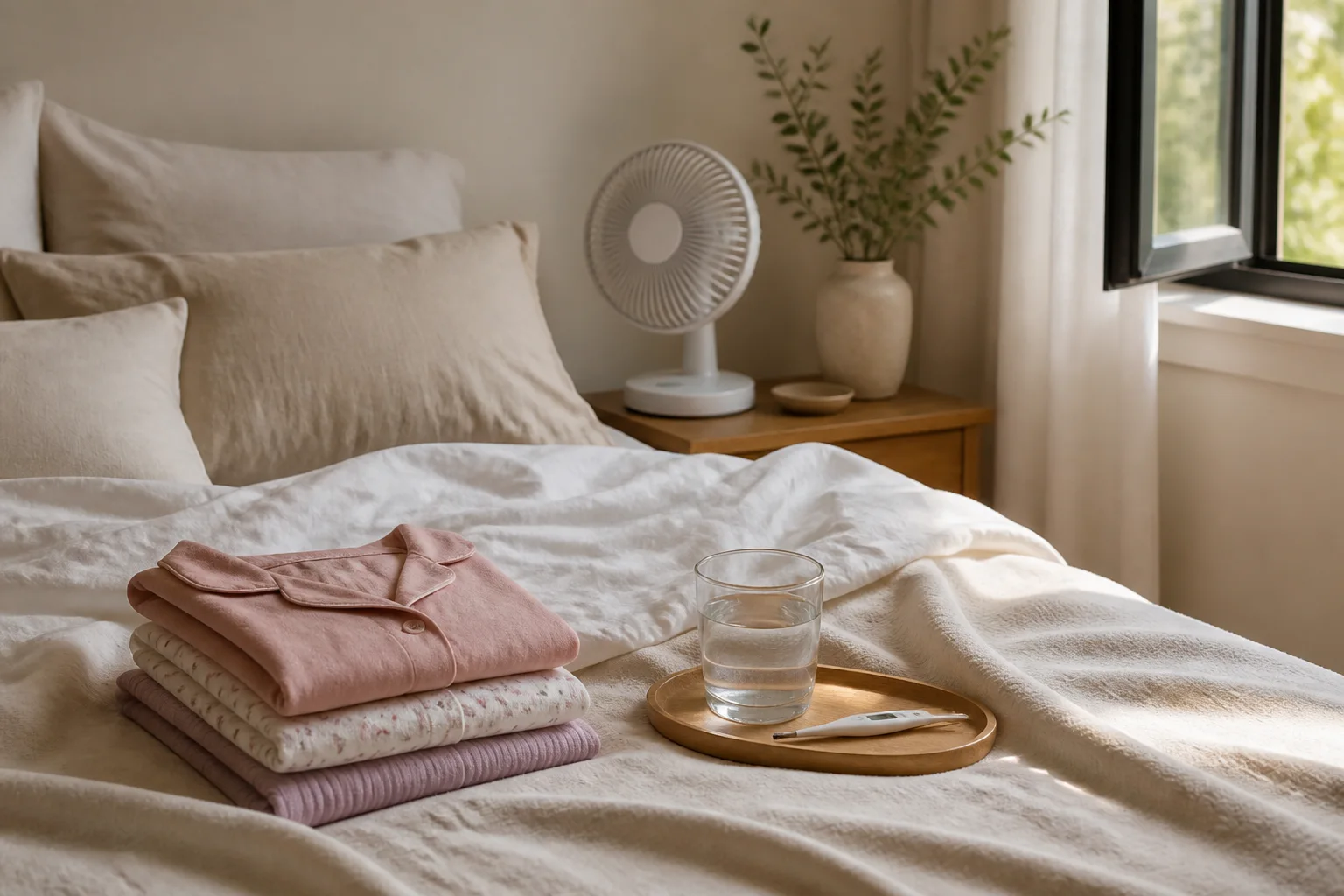
- Set the thermostat to 65°F (18°C) or below: The cooler your room, the more efficiently your body can dissipate heat. If you share a bed with a partner who prefers warmth, consider a dual-control heating blanket or separate blankets.
- Use a fan: A small fan pointed at your side of the bed or near your face significantly helps with heat dissipation. Some people find that oscillating fans prevent the air from becoming stagnant and clammy.
- Choose moisture-wicking bedding: Sheets and pillowcases made from moisture-wicking fabrics (bamboo-derived, certain polyester blends, or TENCEL™ lyocell) draw sweat away from your skin rather than absorbing it.
- Layer your bedding: Instead of one heavy comforter, use multiple layers (a lightweight blanket plus a heavier duvet) so you can adjust your warmth level quickly. Keep a spare set of sheets, a dry blanket, and a dry pillowcase within arm's reach so you do not have to fully get up to change bedding.
- Sleep on a towel or absorbent pad: Place a large bath towel or a waterproof mattress protector under you. When you wake up sweaty, you can simply pull off the wet towel and go back to sleep on the dry layer beneath.
Nightwear Choices
What you wear to bed affects how sweat accumulates and how quickly you cool down:
- Moisture-wicking fabrics: Look for athletic sleepwear brands that use moisture-wicking technology (similar to running shirts). These fabrics pull sweat away from your skin, keeping you cooler and more comfortable.
- Natural fibers: Cotton and linen are breathable and comfortable. Bamboo-derived fabrics offer additional moisture-wicking properties.
- Avoid synthetics that trap heat: Nylon, polyester (unless specifically moisture-wicking), and satin can trap heat and make sweating feel worse.
- Remove layers when hot: Keep nightwear options simple so you can quickly strip off a layer if you wake up too warm.
Hygiene and Comfort Measures
- Shower before bed: A cool (not cold) shower before bed lowers your body temperature and can reduce the intensity of early-night sweating. It also helps you feel clean and refreshed.
- Keep water by the bed: You will be thirsty after sweating heavily. A large water bottle with a straw on your nightstand lets you rehydrate without getting up.
- Cool washcloths: Keep a damp, cool washcloth in a zip-lock bag in the fridge. When you wake up sweating, applying it to your neck, chest, or forehead helps you cool down quickly.
- Change nightwear promptly: While you may want to stay in bed, sleeping in soaked nightwear raises your risk of chills and makes it harder to fall back asleep. Keep a change of nightwear within easy reach.
Dietary Considerations
What you eat and drink affects sweating:
- Stay hydrated: Replace fluids lost to sweating by drinking water consistently throughout the day. Do not wait until you feel thirsty.
- Avoid spicy foods before bed: Capsaicin (the compound that makes food spicy) activates the same receptors that trigger sweating. Eating spicy food in the evening can intensify night sweats.
- Limit caffeine: Caffeine is a stimulant that can elevate heart rate and body temperature. Avoid caffeinated beverages in the afternoon and evening.
- Reduce alcohol: Alcohol dilates blood vessels and can trigger sweating. It also disrupts sleep architecture, which can compound the exhaustion from sleep disruption.
- Eat regular meals: Skipping meals causes blood sugar fluctuations that can affect temperature regulation.
When Night Sweats Signal Something More
While postpartum night sweats are normal and expected, certain signs suggest the sweating may indicate an underlying problem requiring medical attention.
Infection Warning Signs
Postpartum infections—including endometritis (uterine lining infection), urinary tract infections, and surgical site infections (after C-section)—can cause fever and sweating. Distinguishing features:
- Fever above 100.4°F (38°C): Normal postpartum sweating does not cause fever. Any fever over 100.4°F in the postpartum period requires evaluation.
- Chills and shivering: Normal sweating does not cause chills. If you are sweating and shivering simultaneously, this suggests an infection response.
- Localized pain: Uterine tenderness, abdominal pain, or pain and redness at a C-section incision site combined with sweating.
- General malaise: Feeling significantly unwell, fatigued beyond normal exhaustion, or confused.
If you have fever and sweating together, contact your provider within hours, not days. Postpartum infection can progress rapidly and requires prompt treatment with antibiotics.
Thyroid Considerations
Postpartum thyroiditis—an inflammation of the thyroid gland that occurs in the first year after delivery—can cause both hyperthyroid symptoms (sweating, heat intolerance, rapid heartbeat) and hypothyroid symptoms (fatigue, cold intolerance, weight gain). If night sweats are accompanied by significant energy changes, mood changes, hair loss, or temperature intolerance that persists beyond 12 weeks, ask your provider to check your thyroid function. For more details, see our full guide on postpartum thyroiditis.
When to Call Your Provider
Contact your healthcare provider if:
- Fever above 100.4°F (38°C) accompanies sweating
- Sweating is accompanied by chills, severe headache, or body aches
- Night sweats are so severe you cannot sleep or function
- Symptoms persist beyond 8 weeks without improvement
- You experience other symptoms: racing heart, significant mood changes, unusual fatigue, unexplained weight loss
- You have a history of thyroid disease or autoimmune conditions
Sleep Strategies for Sweaty Nights
The exhaustion of new parenthood is compounded significantly when your sleep is repeatedly interrupted by drenching sweats. These strategies help protect as much sleep as possible:
- Sleep in shifts: If you have a partner, take turns with who gets the longer uninterrupted stretch of sleep. One of you sleeps during the first part of the night while the other handles early feedings, then swap.
- Keep a change station by the bed: Nightwear, a dry towel, and a plastic bag for wet clothes so you can change without leaving the bed or walking to the bathroom.
- Use a mattress protector: Waterproof mattress protectors save you from having to replace a soaked mattress at 4 a.m.
- Layer your mattress: A removable mattress pad on top of your regular mattress lets you simply strip off the wet top layer.
- Pre-set an alarm for a brief wake-up: If you tend to sweat heavily around 3–4 a.m., set a gentle alarm for that time. Get up, change into dry nightwear, use the bathroom, and go back to sleep before the sweat fully soaks everything.
- Accept the disruption: Give yourself permission to feel frustrated. Night sweats are genuinely disruptive and it is reasonable to be annoyed by them even while knowing they are temporary.
- Nap when baby naps: If night sweats are wrecking your nighttime sleep, compensate with daytime naps. This is one of the most important sleep hygiene strategies for new parents—see our full guide on sleep deprivation for new parents.
Recommended Products for Postpartum Night Sweats: Why It Happens and How to Manage (2026)
- Postpartum Night Sweats: Why It Happens And How To Manage — Retail availability varies
- Table Of Contents — Retail availability varies
- Hormonal Explanation — Retail availability varies
Prices and availability as of {{date}}.
Frequently Asked Questions
Why do you sweat so much after having a baby? Postpartum night sweats are caused by dramatic hormonal shifts—specifically, the rapid drop in estrogen and progesterone after delivery. Your body also retains fluid during pregnancy and must shed it through sweating and increased urination. Additionally, elevated prolactin levels (for breastfeeding) contribute to sweating. The combined effect is intense sweating, especially at night.
How long do postpartum night sweats last? Most people experience postpartum night sweats for 2 to 4 weeks after delivery, with peak intensity in the first week. Some continue to sweat heavily for 6 to 8 weeks, particularly if breastfeeding. The night sweats typically resolve on their own once hormonal levels stabilize, usually by 8 to 12 weeks postpartum.
Is it normal to wake up soaking wet after having a baby? Yes, soaking wet night sweats are very common in the first 2 to 3 weeks postpartum and are a normal part of your body readjusting after pregnancy. However, if night sweats are accompanied by fever, chills, or other concerning symptoms, or if they persist beyond 8 weeks, contact your healthcare provider.
What helps with postpartum night sweats? Practical strategies include: keeping your bedroom cool (65°F/18°C or below), using a fan, sleeping on a towel or waterproof mattress protector, wearing moisture-wicking nightwear, staying hydrated, showering before bed, avoiding spicy foods and caffeine before sleep, and keeping a water bottle and change of clothes by your bed.
When should I be worried about postpartum sweating? Contact your provider if: sweating is accompanied by fever above 100.4°F, chills, or body aches; night sweats are so severe you cannot sleep; symptoms persist beyond 8 weeks; you experience drenching sweats during the day as well as at night; or you have a history of thyroid disorders. These could indicate an infection or other medical condition.
Do breastfeeding mothers have more night sweats? Yes, breastfeeding is associated with more intense and prolonged night sweats. Prolactin, the hormone responsible for milk production, also stimulates sweat glands. Additionally, nursing sessions often trigger sweating. Some people find that their night sweats improve or resolve after they stop breastfeeding.
How do I know if my night sweats are a sign of postpartum infection? Infection-related sweating is typically accompanied by fever above 100.4°F, chills, a racing heart rate, general malaise, and sometimes localized pain (e.g., uterine tenderness with endometritis). Normal postpartum sweating does not cause fever. If you have fever plus sweating, contact your provider immediately.
Are night sweats different after C-section vs vaginal delivery? Night sweats occur after both cesarean and vaginal delivery. However, C-section recovery often involves additional medication (such as oxytocin during and after surgery) and slower initial mobilization, which may slightly affect the sweating pattern. The hormonal shifts are the primary driver regardless of delivery method.
Sources & Methodology
- American College of Obstetricians and Gynecologists (ACOG). "Optimizing Postpartum Care." Committee Opinion No. 736, 2018.
- Mainpally, M. et al. "Prevalence of postpartum night sweats." Journal of Midwifery & Women's Health, 2021.
- NHS. "Your body after the birth." NHS Website, 2024.
- Stanford Children's Health. "Postpartum Care: The First 6 Weeks." Lucile Packard Children's Hospital, 2024.
- Mayo Clinic. "Postpartum: What to expect in the first weeks." Patient Care, 2025.
- Lee, K.A. et al. "Sleep and postpartum recovery." Jognn, 2020.
- UpToDate. "Postpartum care: Initial assessment and follow-up." Patient Education, 2025.
Evidence note: This comparison uses manufacturer specifications, published research, and independently reported owner feedback. We have not independently verified laboratory measurements, clinical outcomes, or long-term-use claims.