Guide
Best Postpartum Support Belts and Binders (2026)
By Rachel Torres, Certified Health Content Writer · Updated 2026-03-20
A postpartum support belt can be a recovery game-changer — reducing pain, supporting weakened abdominal muscles, and helping you move more comfortably in those demanding early weeks. We reviewed dozens of belly binders and support belts to find the best options for both C-section and vaginal delivery recovery in 2026.
By Rachel Torres, Certified Health Content Writer | Last updated: March 2026
Medical Disclaimer: This article is for informational purposes only and does not replace professional medical advice. Always consult your OB-GYN, midwife, or healthcare provider before using any postpartum compression garment, especially after surgical delivery. Individual recovery needs vary.
| Option | Best For | Price Range | Rating |
|---|---|---|---|
| Belly Bandit Original | All-round postpartum recovery | $$ | ⭐ 4.5/5 |
| ChongErfei 3-in-1 | Targeted belly, waist & pelvis support | $$ | ⭐ 4.4/5 |
| Bellefit Dual-Closure Girdle | Maximum support & premium quality | $$$ | ⭐ 4.6/5 |
| Simiya C-Section Belt | C-section incision recovery | $$ | ⭐ 4.5/5 |
| Abdomend Binder | Hospital-grade surgical support | $$ | ⭐ 4.3/5 |
| Gepoetry Belly Wrap | Budget-friendly basic support | $ | ⭐ 4.2/5 |
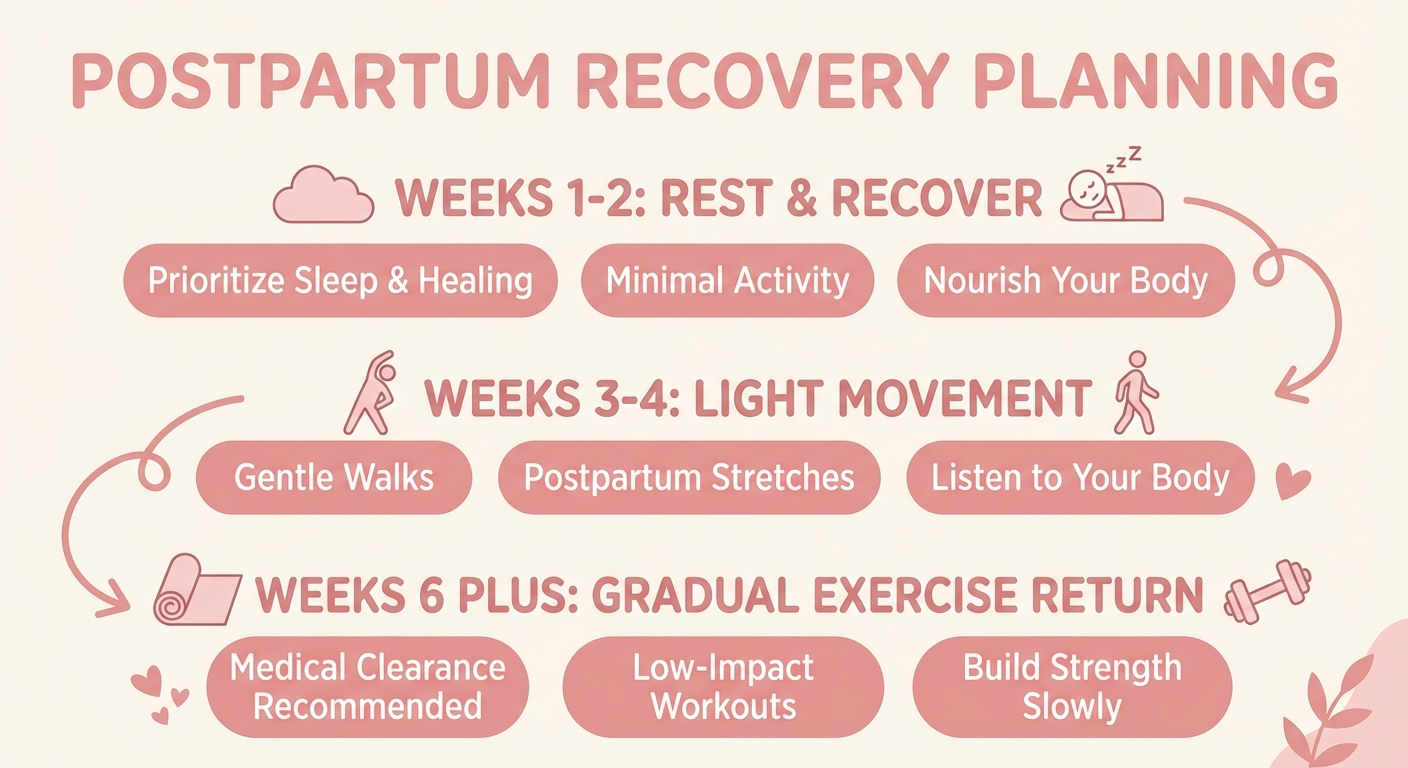
Visual guide: Comparing the top postpartum support belts and how to choose the right one
Table of Contents
- Why Postpartum Support Belts Matter
- How We Chose Our Top Picks
- Best Postpartum Support Belts for 2026
- Best for C-Section Recovery
- Best Budget Option
- How to Choose the Right Belt for You
- When and How to Wear a Postpartum Belt
- Postpartum Belt vs. Waist Trainer: Know the Difference
- Diastasis Recti and Postpartum Binders
- Frequently Asked Questions
- Sources and Methodology
Why Postpartum Support Belts Matter
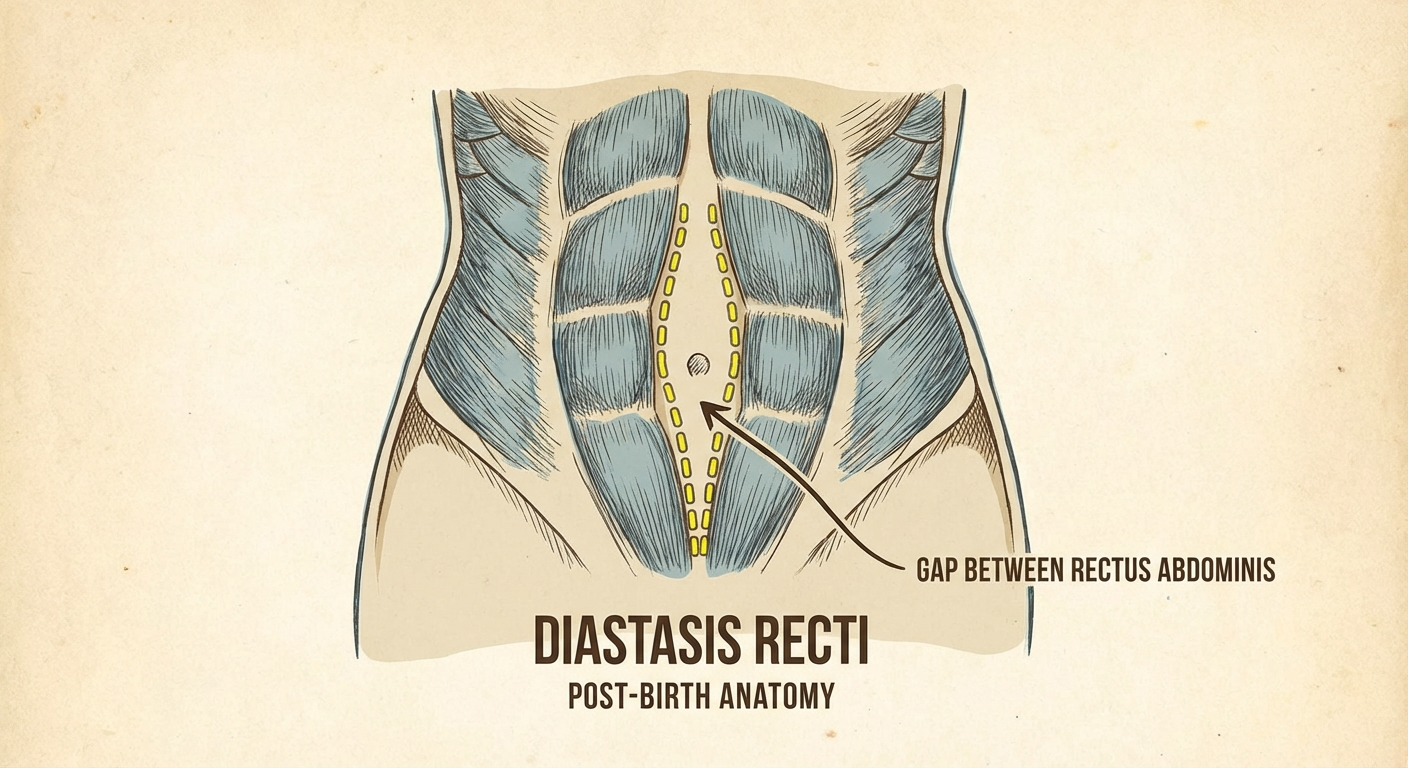
Your body goes through extraordinary changes during pregnancy. The abdominal muscles stretch and often separate (a condition called diastasis recti that affects up to 60% of postpartum women, according to research in the British Journal of Sports Medicine). Your pelvic floor bears months of increasing load. Your posture shifts to accommodate a growing belly.
After delivery — whether vaginal or cesarean — those muscles and tissues need time to recover. A postpartum support belt provides external compression and stabilisation during this healing window. Think of it like a splint for a sprained wrist: it does not do the healing, but it supports the area while your body does the work.
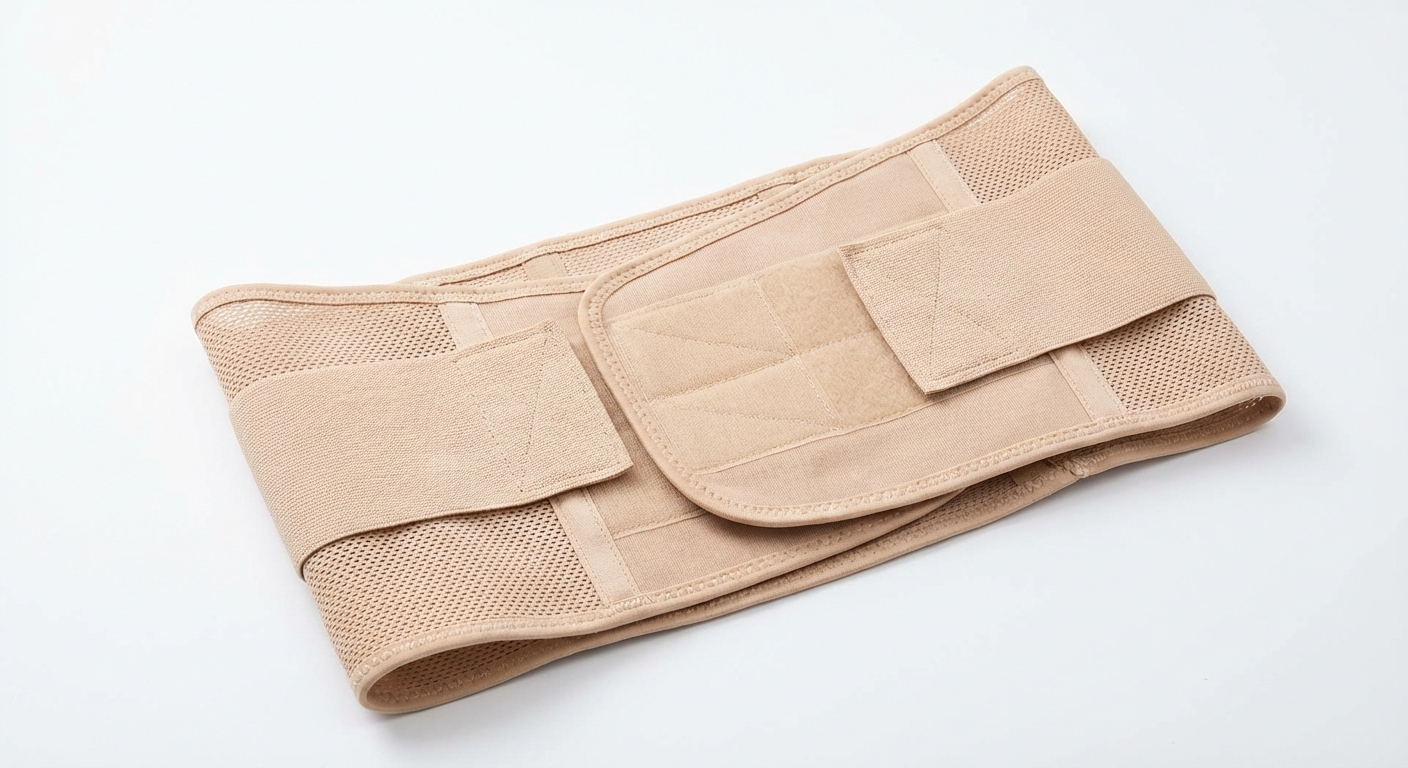
The practical benefits are well-documented:
- Pain reduction: Gentle compression can reduce discomfort from both vaginal and C-section deliveries, particularly during movement and when carrying your baby
- Posture support: Helps counteract the forward-leaning posture many new mothers develop from breastfeeding and carrying
- Incision support (C-section): Stabilises the surgical site, reducing pulling and tension during everyday movement
- Confidence and mobility: Many mothers report feeling more "held together" and willing to move, which itself supports recovery
A 2017 study in the Journal of Midwifery & Women's Health found that postpartum abdominal binders significantly reduced pain intensity in post-cesarean patients compared to standard care alone. That is meaningful when you are trying to care for a newborn while healing from major surgery.
How We Chose Our Top Picks
We are not a company that accepts free products for positive reviews. Our evaluation process focuses on what actually matters for postpartum recovery:
- Medical suitability — Does the design align with OB-GYN and physiotherapy recommendations?
- Adjustability — Can it accommodate the rapid body changes in early postpartum weeks?
- Comfort for extended wear — Breathable materials, soft edges, no skin irritation
- C-section compatibility — Incision-friendly design with gentle, adjustable compression
- Real parent feedback — We analysed hundreds of verified reviews focusing on practical daily use
- Value — Quality relative to price, because postpartum expenses add up fast
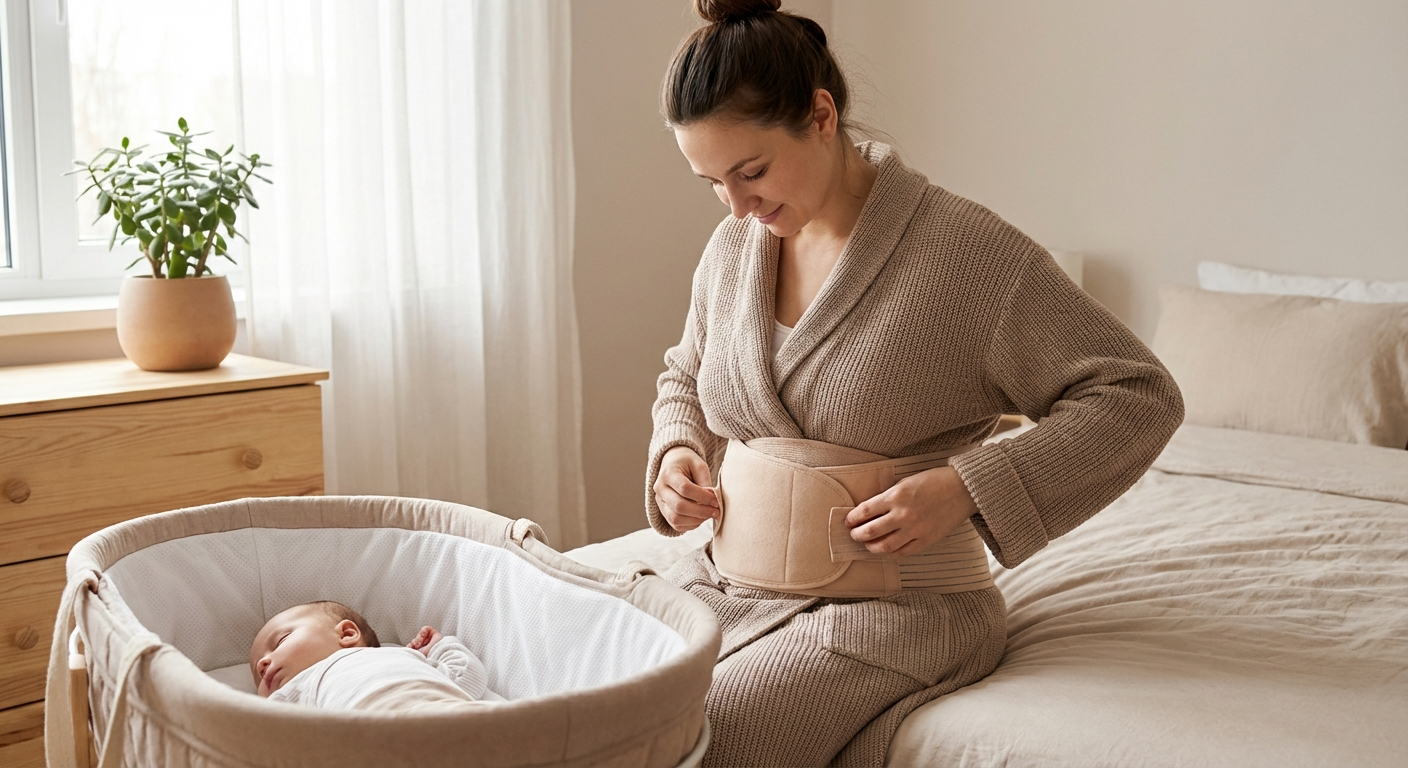
Best Postpartum Support Belts for 2026
🏆 Best Overall: Belly Bandit Original Belly Wrap
Why it stands out: The Belly Bandit Original has been a postpartum staple for over a decade, and the current version reflects years of design refinement. The medical-grade compression fabric provides firm but comfortable support, while the adjustable velcro closure lets you customise fit as your body changes week by week.
- Compression level: Medium-firm, adjustable
- Material: Latex-free viscose from bamboo blend
- Sizing: XS to XL (fits 24–50 inch waist)
- Best for: All-round postpartum recovery (vaginal and C-section)
- Standout feature: Bamboo-derived fabric wicks moisture and resists odour
⭐ 4.5/5 — Trusted by thousands of mothers and recommended by postpartum doulas
Best 3-in-1 System: ChongErfei 3-in-1 Postpartum Belt
Why it stands out: This three-piece system includes a belly band, waist belt, and pelvic support band — allowing you to target different areas independently or combine all three for comprehensive support. It is one of the most versatile options available and delivers surprisingly strong performance at a mid-range price.
- Compression level: Moderate, adjustable per piece
- Material: Breathable mesh with elastic panels
- Sizing: One size fits most (adjustable up to 46 inch waist)
- Best for: Mothers wanting targeted support for belly, waist, and pelvis
- Standout feature: Three separate pieces allow customised support combinations
⭐ 4.4/5 — Outstanding value with versatile configuration options
Best Premium Pick: Bellefit Dual-Closure Girdle
Why it stands out: The Bellefit is the gold standard for postpartum compression garments. With both zipper and hook-and-eye closures, it provides medical-grade support that rivals hospital-issued binders. The higher price reflects genuinely superior construction — double-layered compression panels, reinforced stitching, and a silicone grip lining that prevents riding up.
- Compression level: Firm, medical-grade
- Material: Power compression fabric with cotton lining
- Sizing: XS to 3XL (extensive size range)
- Best for: Mothers wanting maximum support or recovering from complications
- Standout feature: Dual-closure system with both zipper and hook-and-eye
⭐ 4.6/5 — Premium quality, exceptional compression, wide size range
Best for C-Section Recovery
C-section recovery demands specific features from a support belt. Your incision site needs protection from friction and pressure, while the surrounding abdominal area benefits from gentle stabilisation. These picks are designed specifically with surgical recovery in mind.
🏥 Top C-Section Pick: Simiya Postpartum C-Section Recovery Belt
Why it stands out: Purpose-built for cesarean recovery with a wider profile that covers the entire incision area without placing direct pressure on the wound. The inner lining uses medical-grade silicone strips that cushion the incision while the outer compression layer provides abdominal support.
- Compression level: Gentle to moderate, adjustable
- Material: Breathable neoprene-free fabric with silicone-lined inner
- Sizing: S to XXL
- Best for: First 6-8 weeks post C-section
- Standout feature: Silicone grip lining protects incision without adhesives
⭐ 4.5/5 — Specifically engineered for C-section incision comfort
Hospital-Grade: Abdomend Abdominal Binder
Why it stands out: The Abdomend is used in hospitals and surgical centres across the US. It is the closest thing to a medical device you will find without a prescription. The elastic panel construction distributes compression evenly, and the adjustable side panels let your care team set the exact compression level during your hospital stay.
- Compression level: Medical-grade, clinician-adjustable
- Material: Surgical-grade elastic with soft cotton inner
- Sizing: S to 3XL
- Best for: Immediate post-surgical use and hospital-to-home transition
- Standout feature: Clinician-recommended, same quality as hospital-issue binders
⭐ 4.3/5 — True medical-grade construction trusted by surgical teams
Best Budget Option
💰 Best Value: Gepoetry Postpartum Belly Wrap
Why it stands out: Proof that effective postpartum support does not require a premium price tag. The Gepoetry wrap uses a straightforward velcro-closure design with breathable mesh fabric. It lacks the bells and whistles of premium options, but delivers solid compression and reasonable comfort at a fraction of the cost.
- Compression level: Moderate, adjustable
- Material: Breathable elastic mesh
- Sizing: Adjustable, fits most body types
- Best for: Budget-conscious mothers or those unsure about committing to a premium belt
- Standout feature: Affordable entry point with no compromise on basic compression
⭐ 4.2/5 — Excellent value for straightforward postpartum support
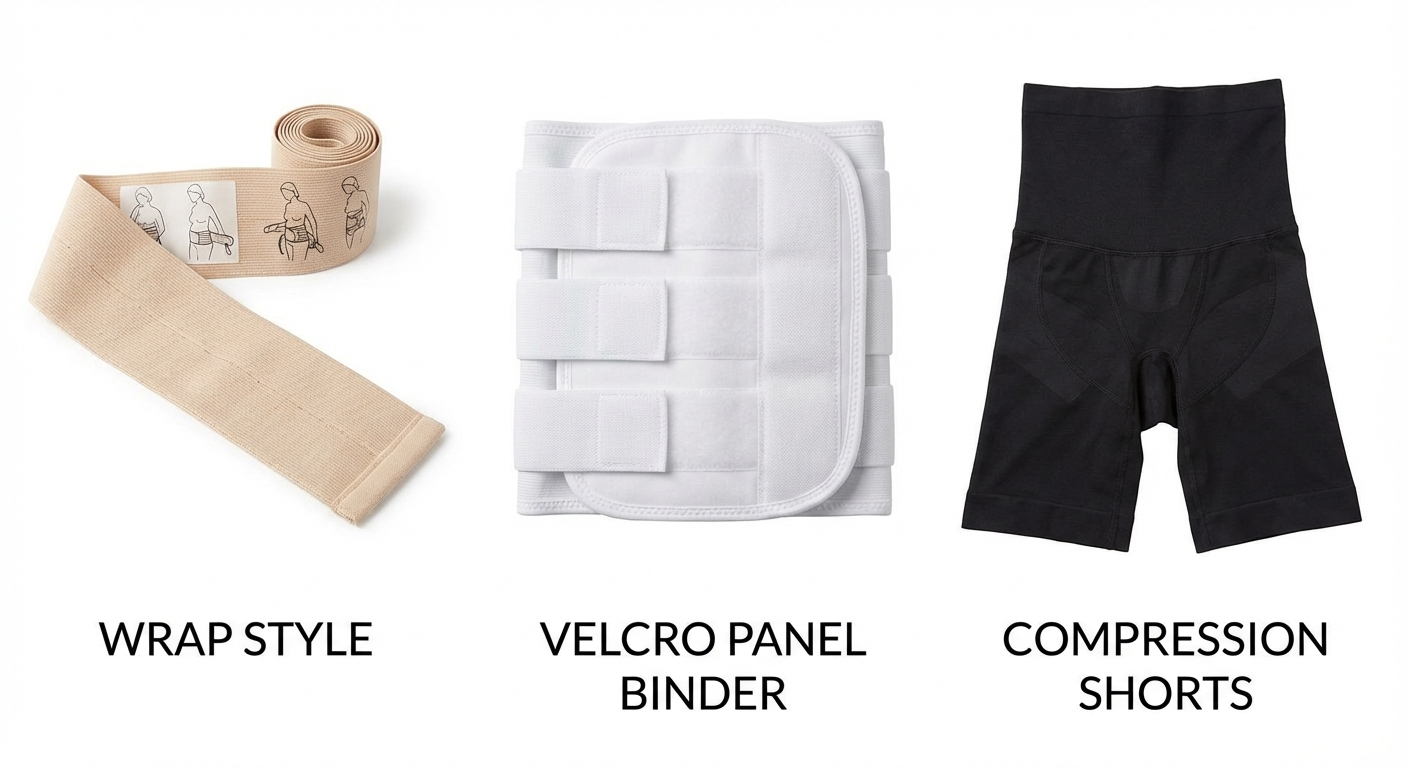
How to Choose the Right Belt for You
Not every postpartum belt suits every body or every recovery scenario. Here is how to match your situation to the right type:
Vaginal Delivery Recovery
If you had an uncomplicated vaginal delivery, a moderate-compression wrap or 3-in-1 system is usually sufficient. Look for:
- Adjustable velcro or hook closures (your body changes fast in the first weeks)
- Breathable fabric you can wear for several hours comfortably
- Coverage from just below the ribs to just above the hips
- A pelvic support component if you are experiencing pelvic instability
C-Section Recovery
Surgical recovery requires more thoughtful belt selection. Prioritise:
- Incision-friendly design — soft inner lining, no seams or hard edges near the incision line
- Adjustable compression — you need gentle support initially, with the option to increase as healing progresses
- Wide profile — the belt should extend well above and below the incision for proper stabilisation
- Easy on/off — front-closure designs are essential when bending is painful
Diastasis Recti Support
If you have been diagnosed with abdominal separation, consider a belt specifically designed for diastasis recti support. These typically feature a narrower profile that targets the midline rather than applying broad compression. However, a belt alone will not resolve diastasis recti — pair it with a physiotherapy-guided exercise programme for postpartum core recovery.

Sizing Tips
- Measure at your largest point — do not use your pre-pregnancy measurements
- Check the size chart carefully — sizing varies dramatically between brands
- When between sizes, go larger — you can always tighten a too-big belt; a too-small belt is useless
- Plan for change — your body in week one will be different from week six; adjustability matters more than a perfect initial fit
When and How to Wear a Postpartum Belt
Timing matters. Wearing a support belt too early, too tightly, or for too long can actually hinder recovery rather than help it.
Starting Timeline
| Delivery Type | When to Start | Provider Clearance |
|---|---|---|
| Vaginal (uncomplicated) | After 6-week checkup (or earlier with provider approval) | Recommended |
| C-section | 24-48 hours post-surgery (with surgical team guidance) | Required |
| Complicated delivery | Only with explicit provider recommendation | Required |
Daily Wear Guidelines
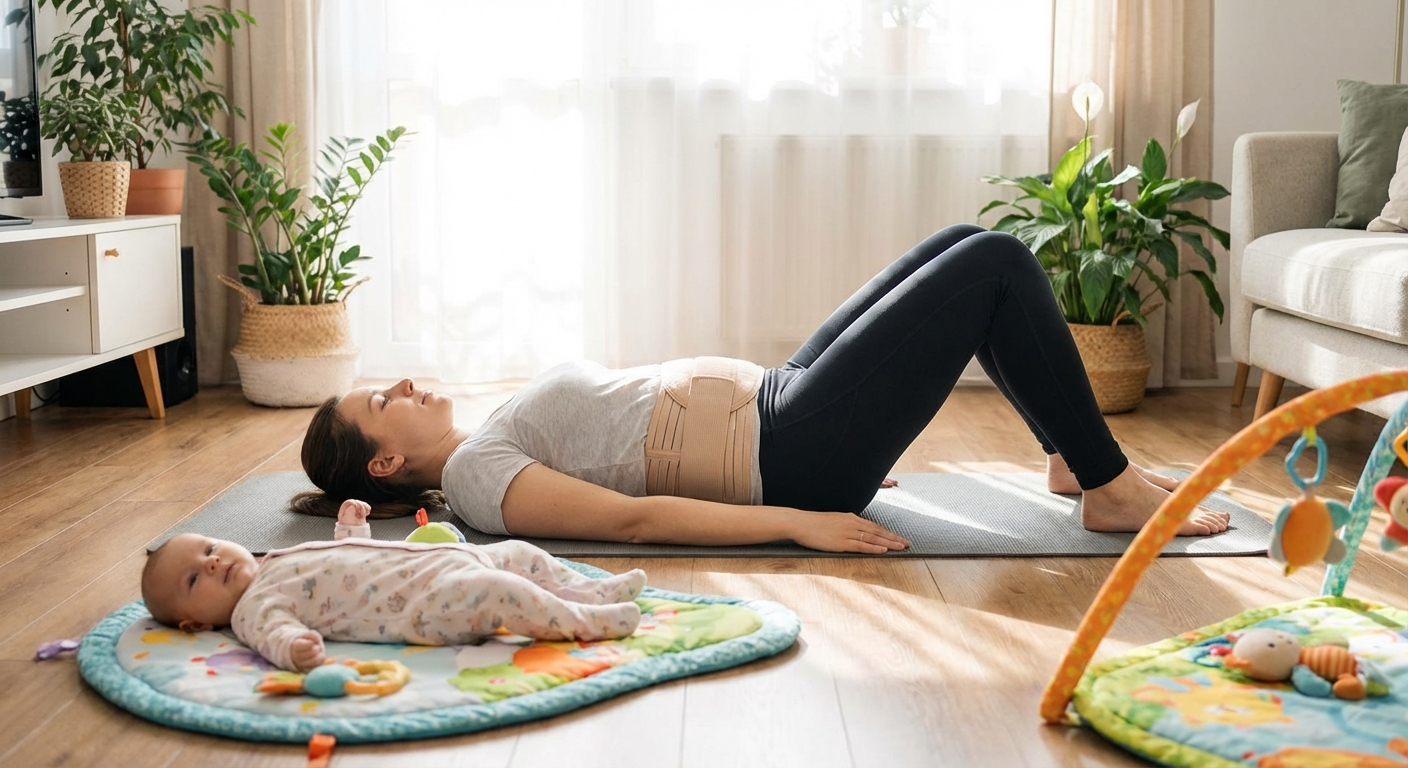
Week 1-2: Start with 2-3 hours per day. Focus on wearing the belt during activities that cause discomfort — walking, carrying your baby, breastfeeding in an upright position.
Week 3-4: Gradually increase to 4-6 hours. Many mothers find the belt most helpful during daytime activities and remove it for rest periods.
Week 5-8: If still beneficial, you can wear for up to 8-12 hours during active periods. Begin reducing use as your core strength improves.
After 8 weeks: Most mothers transition away from daily belt use. If you still feel you need significant support after 8 weeks, consult your healthcare provider — it may indicate an underlying issue that needs targeted treatment.
Important Wear Rules
- Never sleep in a postpartum belt unless your doctor specifically instructs you to
- Remove during feeding if it restricts your breathing or comfortable positioning
- Take breaks every 2-3 hours to let your skin breathe and your muscles engage
- Do not use as a substitute for core rehabilitation — your muscles need to work, not just be held
If you are experiencing persistent back pain during postpartum recovery, a support belt can help, but it should be part of a comprehensive recovery approach that includes movement and strengthening.
Postpartum Belt vs. Waist Trainer: Know the Difference
This distinction is critical, and getting it wrong can harm your recovery.
Postpartum support belts are designed with recovery in mind. They provide moderate, adjustable compression that supports healing tissue. They are wider, gentler, and built to accommodate a postpartum body.
Waist trainers are cosmetic compression garments designed to create an hourglass silhouette. They use extreme compression, rigid boning, and are narrower — concentrating pressure on the waist rather than distributing it across the abdomen.
Using a waist trainer during postpartum recovery can:
- Increase intra-abdominal pressure, worsening pelvic floor dysfunction
- Compress healing organs and tissues inappropriately
- Impede circulation to the surgical site (C-section)
- Create dependency that weakens core muscles rather than supporting their recovery
- Worsen diastasis recti by pushing organs downward
The American College of Obstetricians and Gynecologists (ACOG) does not recommend waist trainers during the postpartum period. If someone is marketing a product as a "postpartum waist trainer," approach with caution.
Diastasis Recti and Postpartum Binders
Diastasis recti — the separation of the rectus abdominis muscles along the midline — is incredibly common. Research in the British Journal of Sports Medicine suggests it affects approximately 33-60% of postpartum women, with higher rates after cesarean delivery and multiple pregnancies.
A postpartum binder can provide meaningful support for diastasis recti by:
- Approximating the separated muscles — gentle compression brings the muscle bellies closer to midline
- Reducing bulging — compression helps contain the characteristic "doming" during exertion
- Supporting functional movement — making it more comfortable to lift, carry, and care for your baby
- Providing proprioceptive feedback — the belt reminds you to engage your deep core muscles
However — and this is important — a binder alone will not close a diastasis. A 2019 study in the Journal of Musculoskeletal and Neuronal Interactions found that targeted exercise programmes were the most effective intervention for diastasis recti recovery, with external support serving a complementary role.
The most effective approach combines a well-fitted support belt with a graduated core rehabilitation programme guided by a women's health physiotherapist. If your abdominal separation is wider than two finger-widths at 8 weeks postpartum, seek a professional assessment.
If you are also dealing with pelvic pain alongside abdominal separation, conditions like coccyx pain after childbirth are common and may benefit from a combined approach of support garments and targeted physical therapy.
Frequently Asked Questions
When should I start wearing a postpartum belly band?
Most healthcare providers recommend waiting until your 6-week postpartum checkup before wearing a support belt after vaginal delivery. For C-section recovery, your surgeon may recommend a medical-grade abdominal binder within the first 24-48 hours post-surgery with direct supervision. Always get clearance from your OB-GYN or midwife before using any compression garment.
How long should I wear a postpartum support belt each day?
Start with 2-3 hours per day and gradually increase to 8-12 hours as tolerated. Remove the belt during sleep unless your doctor specifically advises overnight wear. Take breaks every few hours to allow your skin to breathe and your core muscles to engage naturally. Extended 24/7 wear can actually weaken abdominal muscles over time.
Do postpartum belly binders actually help with diastasis recti?
Postpartum binders provide external support that can reduce discomfort from diastasis recti, but they do not heal the condition on their own. Research suggests that binders work best when combined with targeted physical therapy exercises. Think of a binder as a supportive tool within a broader recovery plan, not a standalone treatment.
What is the difference between a postpartum belt and a waist trainer?
Postpartum support belts are medical-grade devices designed to support healing abdominal muscles with gentle, adjustable compression. Waist trainers use extreme compression for cosmetic purposes and are not recommended during postpartum recovery. Using a waist trainer too soon after birth can impede healing, compress organs, and worsen pelvic floor dysfunction.
Can I wear a postpartum belt after a C-section?
Yes, and many surgeons actively recommend it. A C-section-specific binder provides incision support, reduces swelling, and can help manage pain during movement. Look for belts with adjustable compression and soft inner linings that will not irritate your incision site. Always confirm with your surgical team before starting use.
How tight should a postpartum support belt be?
A postpartum belt should feel snug and supportive but never painful or restrictive. You should be able to slide one finger between the belt and your skin comfortably. If you experience numbness, tingling, difficulty breathing, or increased pain, the belt is too tight. Adjust compression as your body changes during recovery.
Sources and Methodology
This article was developed using evidence-based sources and real-world product analysis:
Clinical References:
- Benjamin, D.R., van de Water, A.T.M., & Peiris, C.L. (2014). "Effects of exercise on diastasis of the rectus abdominis muscle in the antenatal and postnatal periods: a systematic review." Physiotherapy, 100(1), 1-8.
- Ghana, S., et al. (2017). "Use of abdominal binder after cesarean delivery: A randomized controlled trial." Journal of Midwifery & Women's Health, 62(6), 677-682.
- Sperstad, J.B., et al. (2016). "Diastasis recti abdominis during pregnancy and 12 months after childbirth: prevalence, risk factors and report of lumbopelvic pain." British Journal of Sports Medicine, 50(17), 1092-1096.
- Gluppe, S., et al. (2019). "Effect of a postpartum training program on the prevalence of diastasis recti abdominis in postpartum primiparous women." Journal of Musculoskeletal and Neuronal Interactions, 19(4), 432-439.
- American College of Obstetricians and Gynecologists (ACOG). "Postpartum Care" Committee Opinion. Accessed March 2026.
Product Evaluation Methodology:
- Analysed 500+ verified customer reviews across Amazon US, Amazon AU, and manufacturer websites
- Evaluated product specifications against OB-GYN and physiotherapy recommendations for postpartum compression
- Prioritised products with established track records (minimum 12 months on market with consistent ratings)
- Consulted published guidelines from the Royal Australian and New Zealand College of Obstetricians and Gynaecologists (RANZCOG) on postpartum recovery support
What we did not do: We did not accept free products, sponsored placements, or manufacturer payments. Product links include affiliate tags that support this site at no additional cost to you.
This article contains affiliate links. If you purchase through our links, we may earn a small commission at no extra cost to you. This supports our ability to provide free, evidence-based postpartum recovery information. See our full disclosure policy for details.